
In the industrial valve manufacturing and supply sector, engineering precision and material testing are only half the battle. Delivering valves without scratch, corrosion, or mechanical damage to job sites worldwide requires an equally rigorous packaging strategy.
At GCC Valves, we implement strict packaging standards for every order—whether it’s a heavy-duty gate valve shipped via sea freight or a compact replacement valve sent via express courier.
1. Why Proper Packaging is Essential for Industrial Valves
During transport, valves are subjected to multi-axis vibrations, rough sea conditions, high humidity, and intermodal freight handling. Without adequate packaging protection, several major issues occur:
- Paint Abrasion & Coating Damage: Continuous friction between bare metal surfaces strips off protective epoxy coating or polyurethane paint, exposing carbon steel to atmospheric corrosion.
- Flange & Sealing Surface Damage: Scratches, gouges, or dents on raised face (RF) or Ring Type Joint (RTJ) flange faces can ruin the gasket seat, leading to leakage under pressure.
- Actuator and Stem Misalignment: Shocks during loading/unloading can bend valve stems or damage sensitive gearboxes and pneumatic actuators.
2. Heavy-Duty Wooden Crating (Freight & Bulk Shipments)
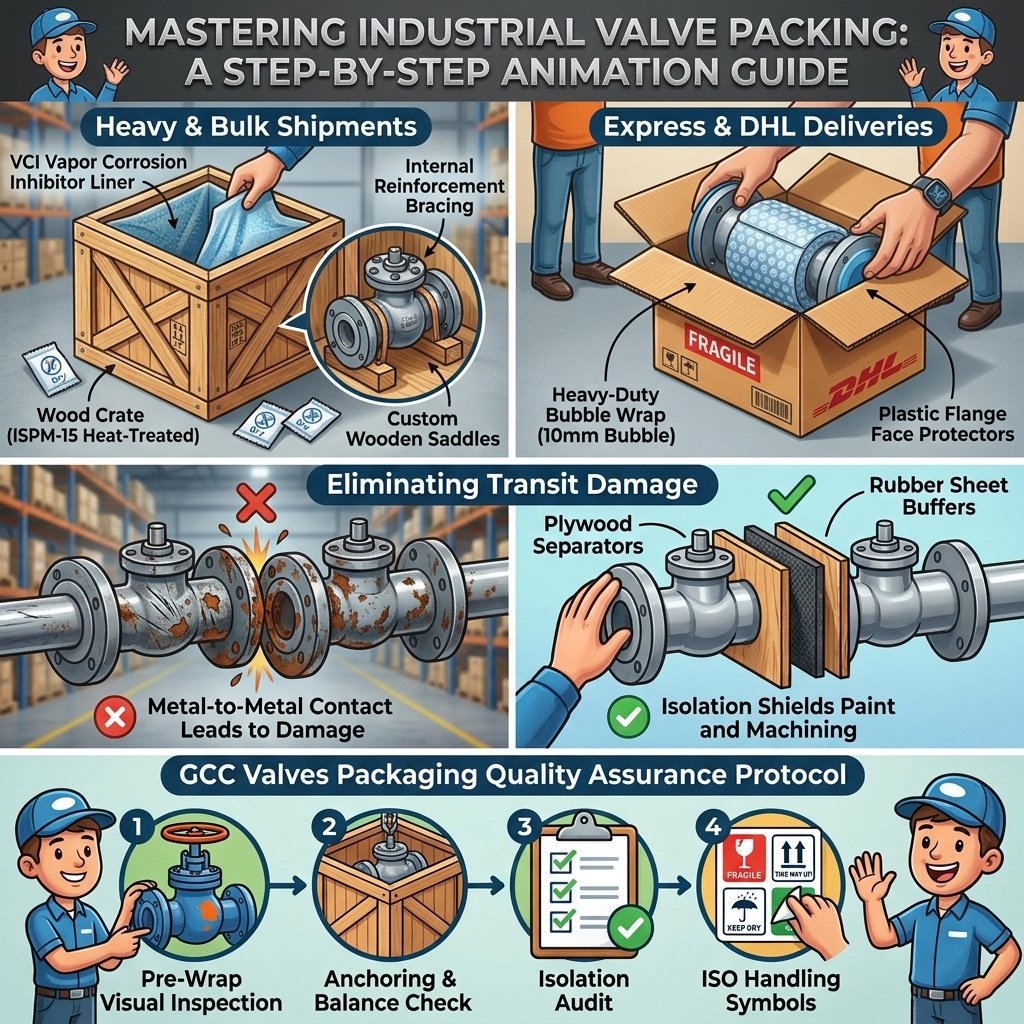
For heavy industrial valves, large-diameter units, and bulk project orders, wooden crating is the primary method of preservation:
- ISPM-15 Certified Heat-Treated Wood: Ensures global customs compliance and protection against pest infestation.
- Custom Wooden Saddles & Internal Bracing: Valves are seated on tailored wooden supports to prevent horizontal movement or shifting.
- VCI (Vapor Corrosion Inhibitor) Liners & Desiccant Bags: The interior of the crate is lined with VCI film and packed with industrial silica gel to protect machined surfaces from ocean salt spray and condensation.
3. Carton Packaging for Express & DHL Deliveries
For smaller shipments, sample dispatches, or urgent air express orders (e.g., via DHL / FedEx):
- Heavy-Duty Double-Wall / Triple-Wall Cartons: High burst-strength corrugated boxes are used to prevent puncture under weight.
- Thick Bubble Wrap & Expanded Foam Fill: Each valve is wrapped in multiple layers of heavy-gauge bubble wrap (minimum 10mm bubble diameter) and padded with expanding foam to eliminate internal void space.
- Plastic End-Cap Flange Protectors: Heavy plastic covers are snapped or bolted onto flange ends to protect sealing faces and keep debris out of internal cavities.
4. Preventing Metal-to-Metal Contact & Coating Damage
One of the most common causes of transit damage in valve shipments is metal-to-metal contact. When bare steel parts rub against each other during transport, the finish deteriorates quickly.
To eliminate metal-to-metal friction, GCC Valves enforces strict isolation guidelines:
- Plywood & Rubber Separators: Solid plywood dividers or thick rubber sheets are inserted between adjacent valves inside crates to ensure full physical isolation.
- Metal Strapping with Protective Buffers: Heavy metal strips/strapping secure the valve tightly to the crate base. To prevent metal bands from scratching the paint, rubber corner guards or plastic buffer pads are placed under every metal band.
- Threaded & Flange Caps: Plastic plugs and caps prevent pipe threads and socket weld ends from knocking against container walls or other components.
5. The GCC Valves Quality Assurance Protocol with SVR
Before any shipment is dispatched, our logistics team executes a comprehensive checklist:
- Visual & Coating Audit: Verifying paint integrity and checking internal valve cavities.
- Isolation & Separator Check: Confirming zero unshielded metal-to-metal contact points.
- Anchoring & Balance Verification: Marking the center of gravity and lifting points clearly on external wooden crates.
- Standardized ISO Markings: Applying ISO handling symbols (Fragile, Keep Dry, This Way Up, Do Not Hook) alongside complete courier documentation.
Visit GCC Valves
For high-performance industrial valves and engineered piping solutions built for demanding applications, visit www.gccvalves.com.